Best Graphics Card for Video Editing
The graphics card does more in video editing than ever: playback, effects, colour, noise reduction, AI tools and hardware encoding. DaVinci Resolve leans on it especially heavily. Here's how to choose the right GPU for your workload and budget.
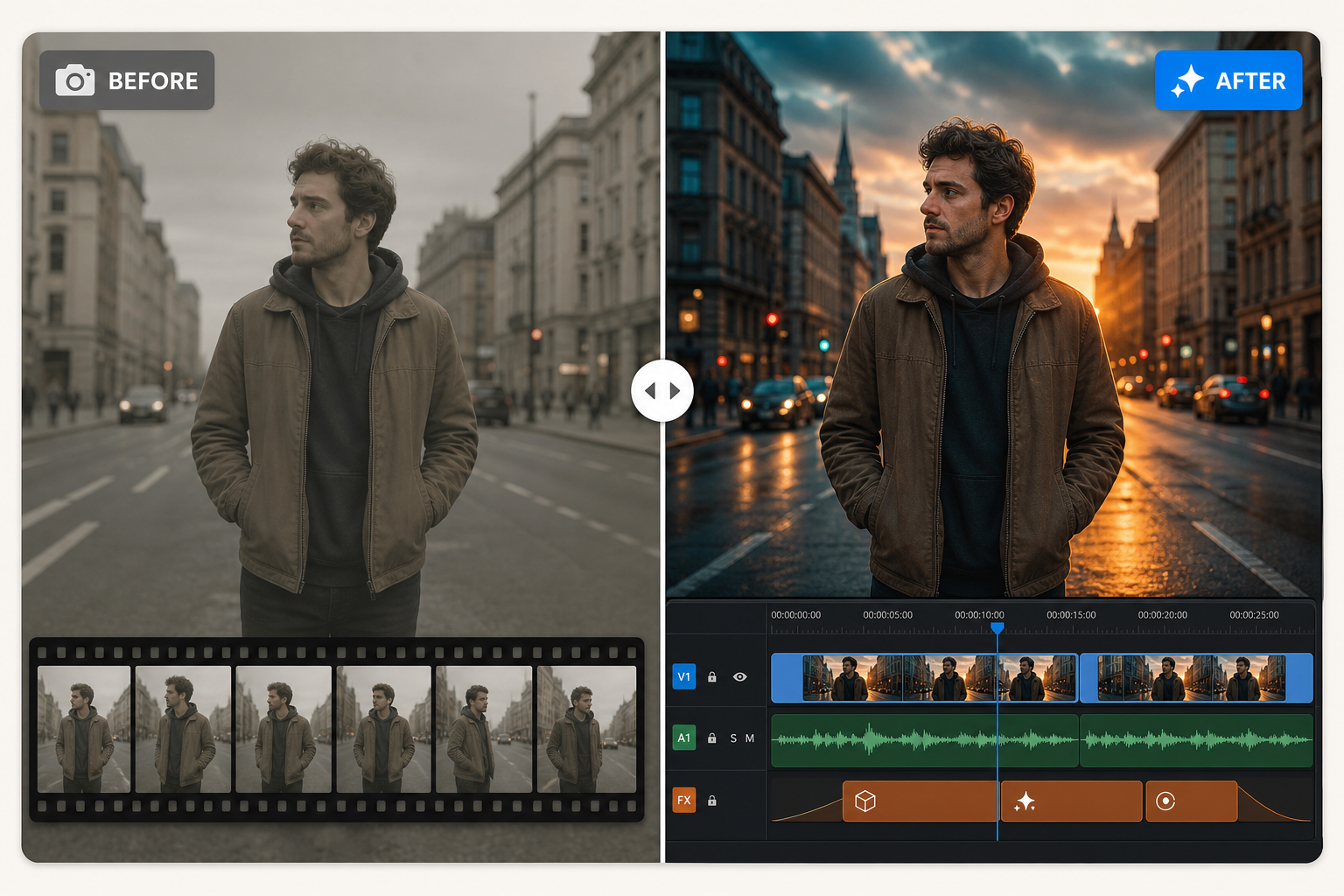
What the GPU Does in Editing
- Accelerates effects, colour grading and scaling
- Decodes and encodes H.264/H.265 with dedicated hardware
- Powers AI features like masking, upscaling and noise reduction
- Drives smooth playback on complex timelines
How Much VRAM Do You Need?
| Workload | VRAM |
|---|---|
| 1080p editing | 6 to 8 GB |
| 4K editing with colour | 8 to 12 GB |
| 4K+ with heavy effects, noise reduction, Fusion | 12 to 16 GB or more |
DaVinci Resolve lists a minimum of 4 GB VRAM, but more makes a big difference.
NVIDIA vs AMD vs Intel
| Brand | Strengths | Considerations |
|---|---|---|
| NVIDIA GeForce RTX | Widest software support, CUDA, strong NVENC encoder, AI features | Usually the safest choice for editors |
| AMD Radeon | Good value and VRAM per rupee | Check support for your specific software features |
| Intel Arc | Strong AV1/HEVC encoding at low prices | Smaller ecosystem; check driver maturity |
Recommended Tiers
| Tier | Example GPUs | Good for |
|---|---|---|
| Entry | RTX 3050 / 4060 class | 1080p and light 4K |
| Mid | RTX 4060 Ti 16 GB / 4070 / 5060 Ti class | 4K editing and colour |
| High | RTX 4070 Ti / 4080 / 5070 Ti / 5080 class | Heavy effects, noise reduction, Fusion, 6K+ |
Premiere Pro relies more on the CPU for many tasks, while Resolve leans heavily on the GPU. If you use Resolve, invest more in the graphics card. See Premiere Pro vs DaVinci Resolve.
Don't want to upgrade your GPU?Our editors work on high-end workstations. Try a free sample.
Claim Your Free 60-Sec EditBalance the Whole System
A strong GPU is wasted with too little RAM or slow storage. See best PC build for video editing, how much RAM you need, best video editing laptop and best monitor for video editing.
Not sure which software you'll grow into? See what pros run in best video editing software for professionals.
The right GPU speeds up every step of editing. A video editing agency in Bangalore like EditAtEase uses GPU-powered workstations to deliver fast turnarounds.
Frequently Asked Questions
What is the best graphics card for video editing?
For most editors, an NVIDIA GeForce RTX card with 8 to 16 GB of VRAM offers the best balance of software support, encoding and performance.
How much VRAM do I need for video editing?
6 to 8 GB for 1080p, 8 to 12 GB for 4K with colour work, and 12 to 16 GB or more for heavy effects and noise reduction.
Is NVIDIA or AMD better for video editing?
NVIDIA generally has broader software support and a strong hardware encoder, making it the safer choice. AMD can offer more VRAM for the price.
Does Premiere Pro use the GPU?
Yes, for effects, scaling, colour and hardware encoding and decoding, though it relies on the CPU more than DaVinci Resolve does.
Stop Editing. Start Creating.
You record, we edit. EditAtEase turns your raw footage into scroll-stopping YouTube videos, Shorts, Reels and podcasts, so you post consistently and finally get your week back.