Cinematic Color Grading Tips for Film-Like Video
A cinematic grade isn't one LUT. It's a combination of controlled contrast, intentional colour, natural skin and subtle texture. These tips work in DaVinci Resolve, Premiere Pro or Final Cut Pro.
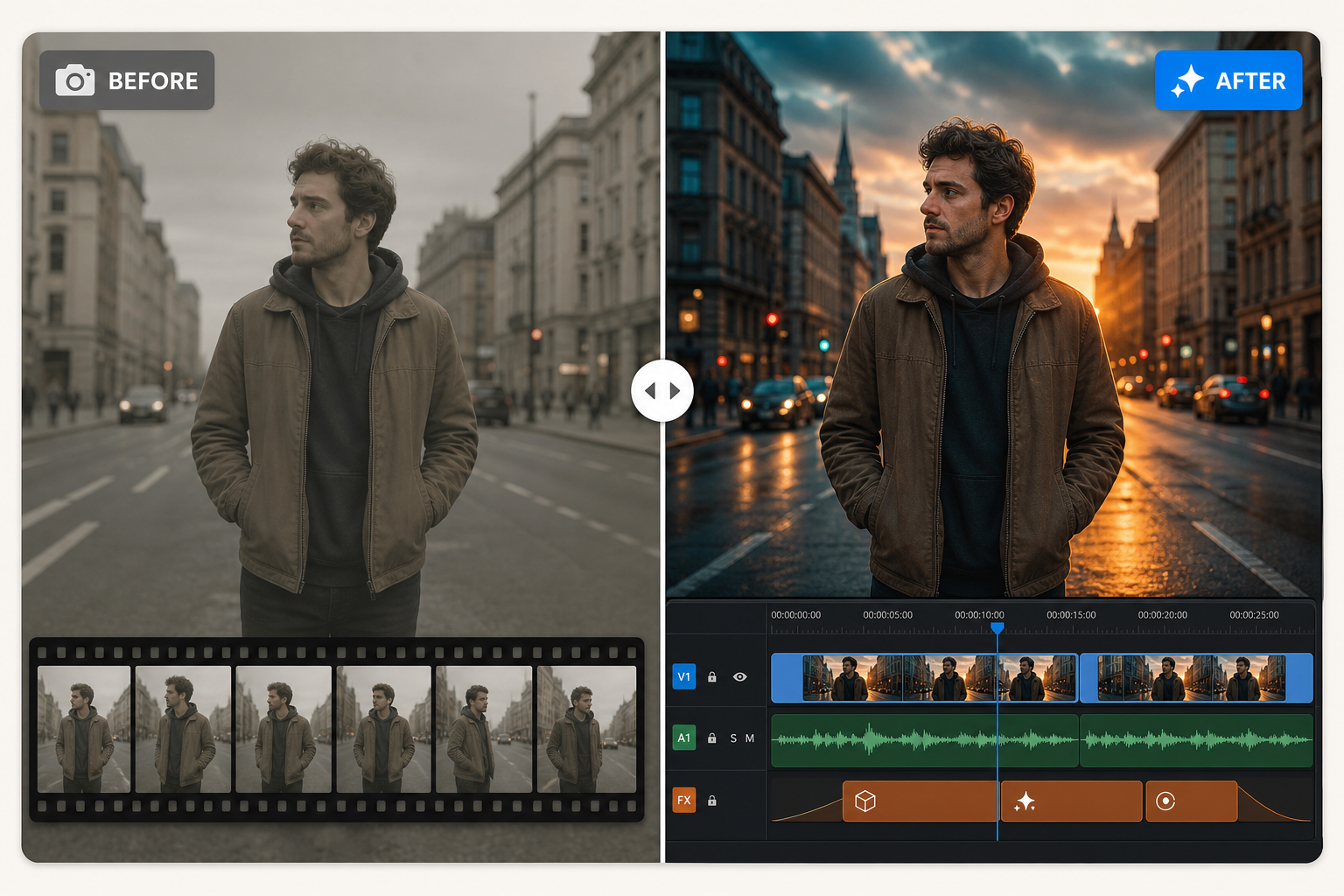
Foundation
- Start with good footage: lighting and art direction do most of the work; see how to make a video look cinematic.
- Correct first: balance exposure and white before styling; see colour grading vs colour correction.
- Use a reference: a film still with the mood you want.
Contrast and Tone
- Gentle S-curve for depth, without crushing detail.
- Soft highlight roll-off so bright areas don't look digital.
- Lift or tint the blacks slightly for a film feel (sparingly).
Colour
- Colour separation: cool shadows and warm highlights create depth; see the teal and orange look.
- Limit your palette: reduce or shift colours that distract.
- Control saturation: cinematic often means slightly less, not more.
- Protect skin: see how to color grade skin tones.
If people notice your grade before the story, it's probably too strong. Step back and reduce intensity by 20%.
Texture and Finishing
- Subtle film grain adds texture and hides banding.
- Halation and bloom (very subtle) for film-like highlights.
- Vignettes to guide the eye.
- Consistency: match shots before styling; see how to match colours between clips.
- Check on multiple screens: phone, laptop and a calibrated monitor.
Want a cinematic look for your brand film?Our colourists craft film-like grades. Try a free sample.
Claim Your Free 60-Sec EditTools
DaVinci Resolve offers the deepest tools for film looks; see how to color grade in DaVinci Resolve.
Cinematic grading is subtle craft. A video production company in Bangalore like EditAtEase grades brand films and creator content with a cinematic eye.
Frequently Asked Questions
How do I make my video look cinematic with color grading?
Correct first, use a reference, shape contrast with a gentle S-curve, create colour separation, control saturation, protect skin tones and add subtle grain.
What colours make footage look cinematic?
Complementary colour separation, such as cooler shadows and warmer highlights, with a limited palette and natural skin tones.
Do I need a LUT for a cinematic look?
No. LUTs can help, but cinematic grades are usually built manually with curves, wheels and secondary adjustments.
Should I add film grain?
Subtle grain can add texture and reduce banding, but keep it light so it doesn't look like noise.
Stop Editing. Start Creating.
You record, we edit. EditAtEase turns your raw footage into scroll-stopping YouTube videos, Shorts, Reels and podcasts, so you post consistently and finally get your week back.