How to Color Grade Skin Tones Naturally
Viewers notice skin before anything else. If skin looks green, orange or plastic, the whole video feels wrong. Here's how to grade skin tones naturally and flatteringly across all skin types.
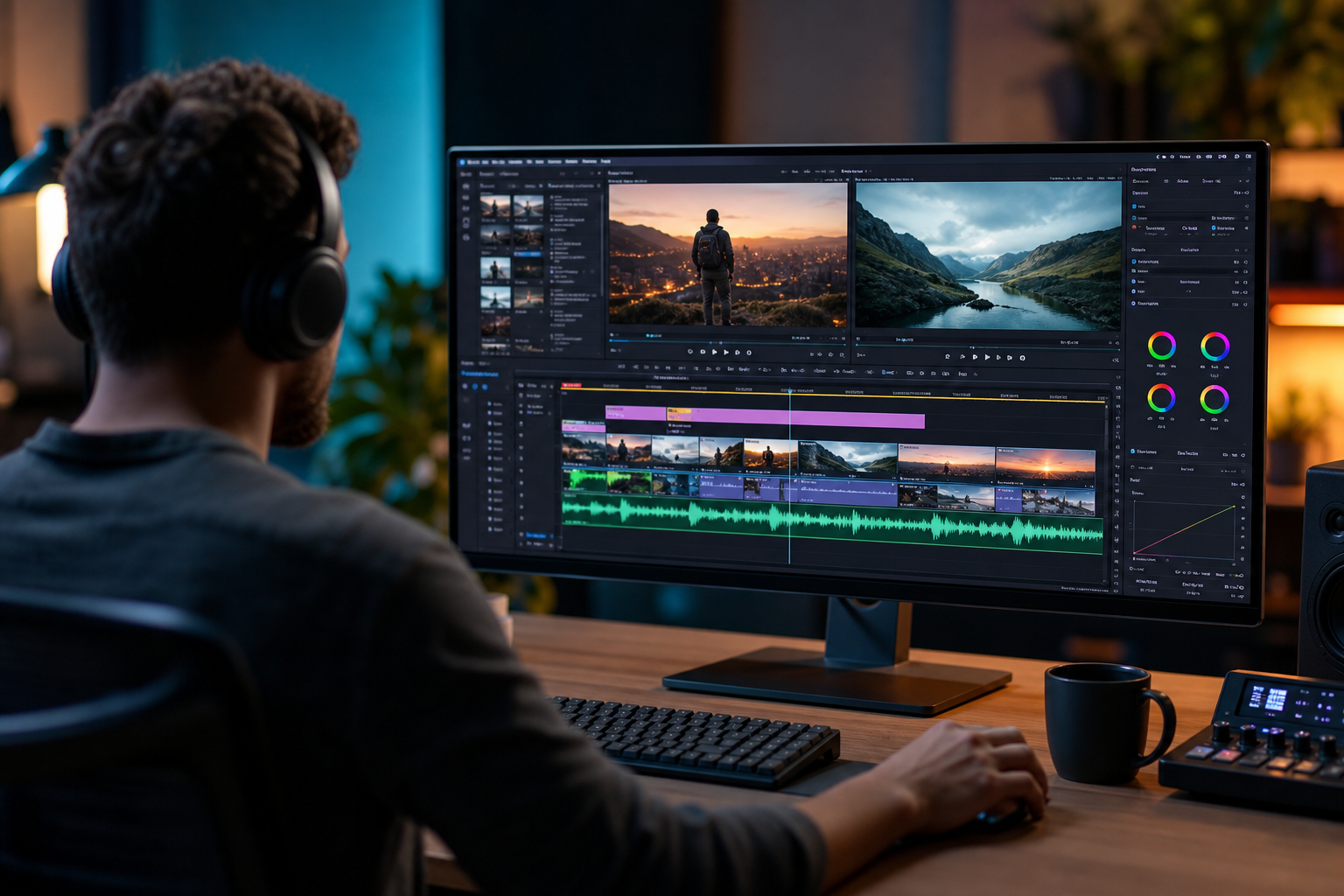
Use the Vectorscope Skin-Tone Line
The vectorscope has a line (the skin-tone or "flesh" line) between red and yellow. Healthy skin of all ethnicities generally sits close to it; skin types differ more in brightness and saturation than in hue. Isolate the face and check where it falls.
Step-by-Step
Correct white balance first
A neutral base makes skin easier; see what is white balance in video.
Set exposure for the face
Skin should sit in the middle-upper range of the waveform for lighter skin, and the middle range for deeper skin, with detail preserved.
Isolate skin
Use a qualifier (HSL key) or a tracked mask to select skin.
Nudge hue toward the line
Shift hue slightly if skin drifts toward green or magenta.
Adjust saturation and luminance
Reduce excess redness or orange; lift slightly for a healthy glow.
Common Problems and Fixes
| Problem | Fix |
|---|---|
| Too orange | Reduce orange saturation; check white balance |
| Green cast (fluorescent / LED) | Add magenta in tint; correct in the skin qualifier |
| Red, blotchy skin | Reduce red saturation in skin only |
| Grey or dull deeper skin | Add warmth and saturation; lift exposure gently |
| Plastic look | Avoid heavy skin smoothing; keep texture |
Don't lighten deeper skin to "brighten" a shot. Light and expose for each person, and keep their natural tone. Brown and deeper skin especially benefits from warmth and good exposure, not lightening.
Want flattering, natural skin tones?Our colourists grade skin for all complexions. Try a free sample.
Claim Your Free 60-Sec EditSkin in Creative Grades
Stylised looks like teal and orange or moody desaturation should still keep skin believable; see how to get the teal and orange look and cinematic colour grading tips.
Keep Skin Consistent
Match skin across angles and scenes; see how to match colours between clips. For the full workflow, see how to color grade video.
For important campaigns, a professional colourist makes a difference; see colour grading services.
Natural skin tones make people trust what they see. A video editing agency in India like EditAtEase grades skin tones carefully for every complexion.
Frequently Asked Questions
How do I make skin tones look natural in color grading?
Correct white balance and exposure, isolate skin with a qualifier or mask, keep it near the vectorscope's skin-tone line, and adjust saturation and brightness gently.
What is the skin-tone line on a vectorscope?
A reference line between red and yellow where healthy skin tones of all ethnicities generally fall.
How do I fix green skin tones in video?
Adjust tint toward magenta and correct the skin hue with a qualifier, often caused by fluorescent or low-quality LED lighting.
How should I grade darker skin tones?
Expose and light for the person, add warmth and saturation where needed, preserve texture and never artificially lighten their natural tone.
Stop Editing. Start Creating.
You record, we edit. EditAtEase turns your raw footage into scroll-stopping YouTube videos, Shorts, Reels and podcasts, so you post consistently and finally get your week back.