How to Color Grade Video Step by Step
Colour grading follows the same logic in every editor: set up correctly, correct the footage, match shots, then create a look. Once you understand the workflow, the software is just buttons. Here's a step-by-step process.
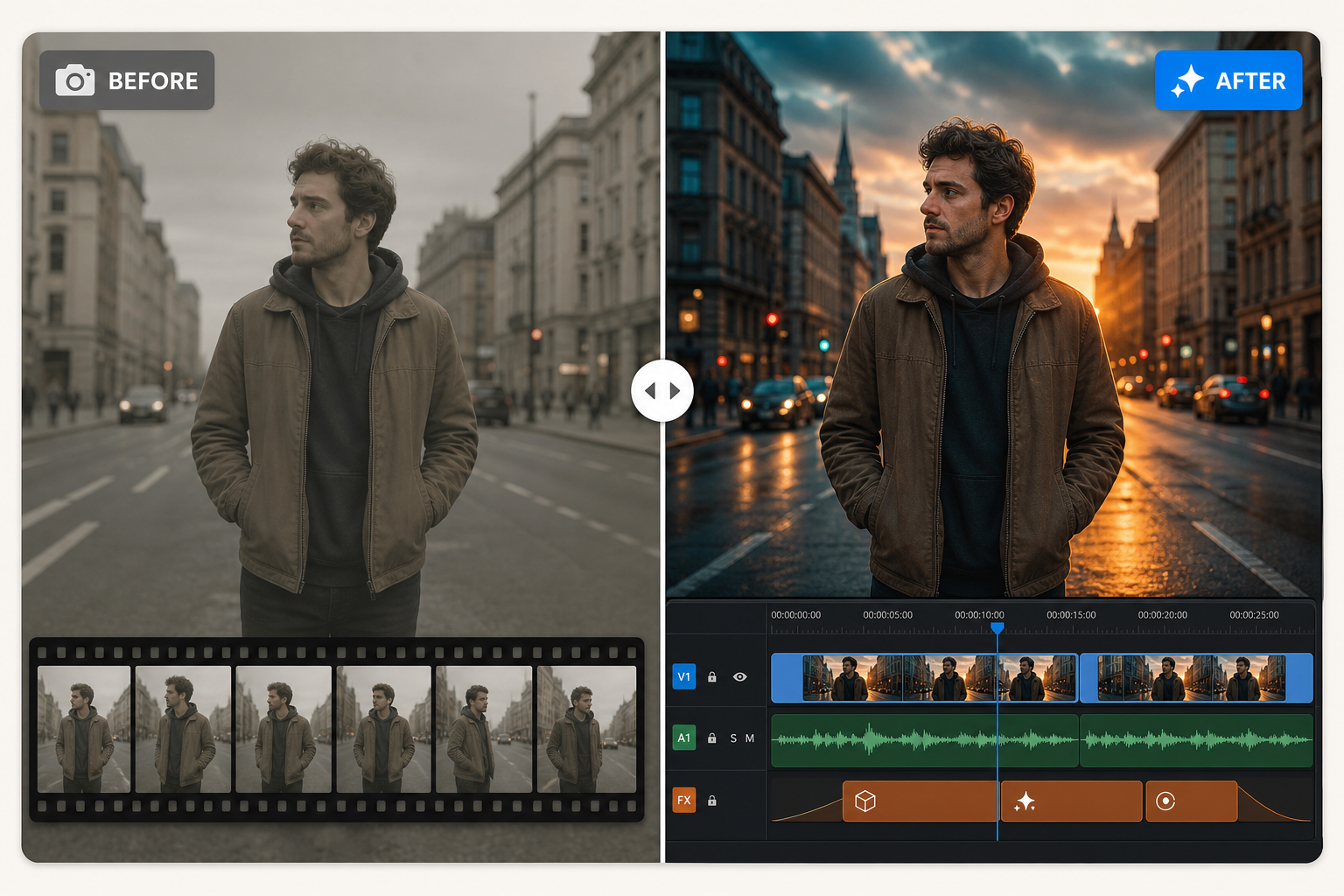
Step 1: Set Up
- Use a reasonably accurate monitor; see best monitor for video editing.
- Set your project colour space, usually Rec.709 for web; see what is Rec.709.
- Open the scopes: waveform, vectorscope and RGB parade.
Step 2: Correct
Convert log footage
Apply a conversion LUT or colour space transform; see how to color grade log footage.
Set exposure and contrast
Place blacks near 0 and highlights below clipping on the waveform.
Balance white
Neutralise grey or white objects so the parade lines up.
Adjust saturation
Bring colours to a natural level.
Step 3: Match Shots
Compare shots side by side and match exposure, white balance and saturation. See how to match colours between clips.
Step 4: Create the Look
- Choose a reference image for the mood.
- Shape contrast with curves.
- Shift shadows and highlights in colour (for example, cooler shadows and warmer highlights).
- Add a creative LUT at reduced intensity, if you use one.
- Use vignettes and masks to guide the eye.
Ideas in cinematic colour grading tips.
Check skin against the vectorscope's skin-tone line after every creative change; see how to color grade skin tones.
Want a professional grade on your footage?Our colourists grade in DaVinci Resolve and more. Try a free sample.
Claim Your Free 60-Sec EditSoftware
The workflow is the same in DaVinci Resolve, Premiere Pro and Final Cut Pro; only the panel names change.
Step 5: Export
Export in Rec.709 for web, check on a phone and a laptop, and make sure the colour tags are correct so platforms display it as intended.
Great grading makes every shot feel intentional. A video editing company in Bangalore like EditAtEase grades creator videos, ads and brand films.
Frequently Asked Questions
How do I color grade a video?
Set up your colour space and scopes, convert log footage, correct exposure and white balance, match shots, then create a look with curves, colour wheels and optional LUTs.
What is the best software for color grading?
DaVinci Resolve is the industry standard. Premiere Pro and Final Cut Pro also have capable colour tools.
Do I need scopes for color grading?
Yes. Scopes measure brightness and colour objectively, which your eyes and monitor can't do reliably.
How long does it take to learn color grading?
The basics can be learned in a few weeks. Developing a strong eye takes much longer with practice.
Stop Editing. Start Creating.
You record, we edit. EditAtEase turns your raw footage into scroll-stopping YouTube videos, Shorts, Reels and podcasts, so you post consistently and finally get your week back.