What Is a Jump Cut? Meaning, Examples and When to Use One
In classical filmmaking, a jump cut was considered a mistake. Today it's the signature edit of YouTube, Reels and podcasts. Understanding what a jump cut is, and when it helps versus hurts, is one of the quickest ways to make your talking-head videos tighter and more watchable.
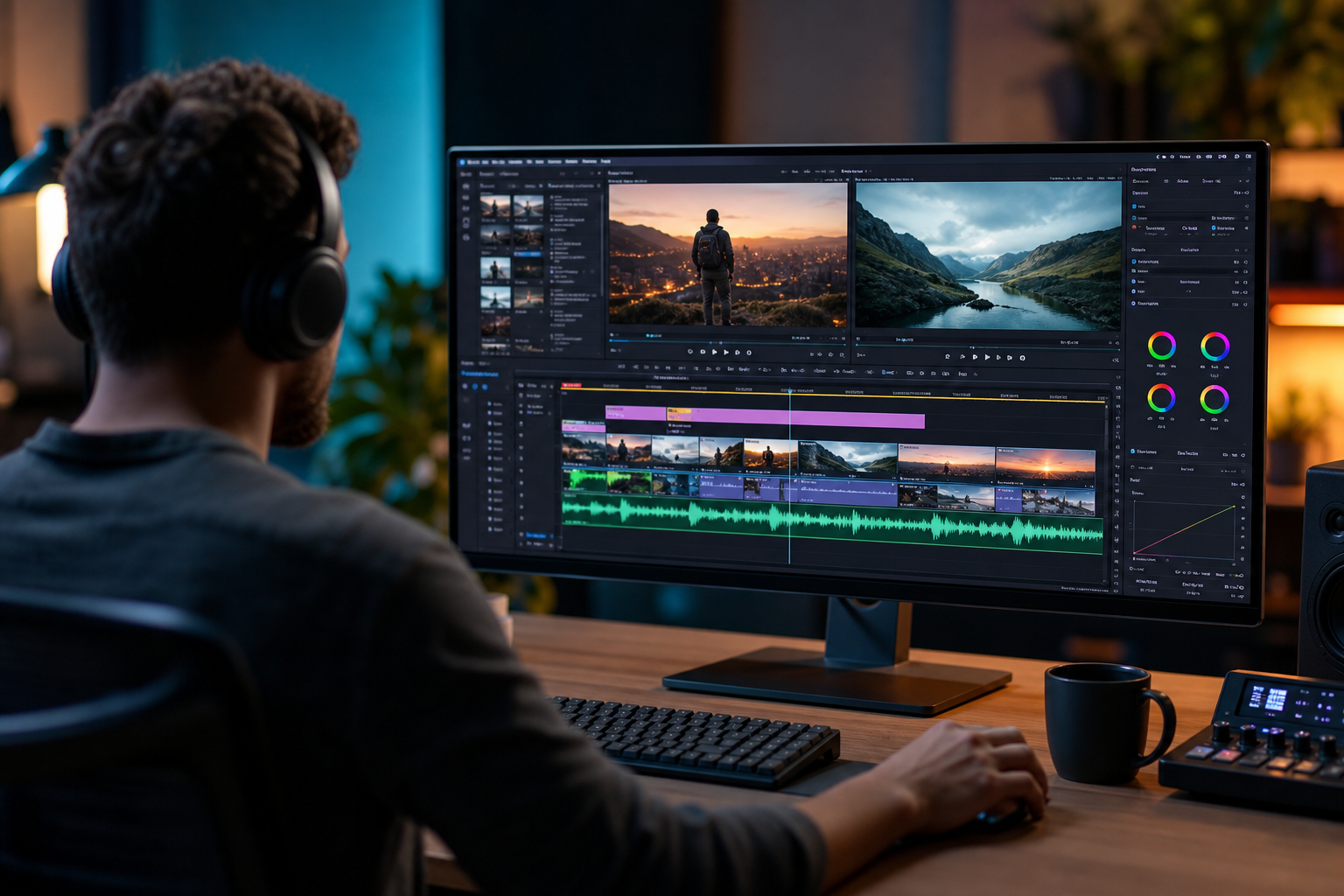
Jump Cut Meaning
A jump cut is an edit between two shots of the same subject, from the same or nearly the same camera angle, where time skips forward. Because the framing barely changes, the subject seems to "jump" in position on screen.
The classic modern example: a YouTuber talking to camera. The editor removes a pause or a stumble between two sentences. The background stays the same, but the person's head shifts slightly at the cut. That's a jump cut.
A jump cut skips time within the same shot, and the viewer can see the skip.
A Short History of the Jump Cut
Early film editing followed "continuity editing" rules designed to make cuts invisible. Cutting between two nearly identical shots broke those rules, so it was seen as an error.
That changed with the French New Wave. Jean-Luc Godard's Breathless (1960) used jump cuts deliberately, creating a restless, modern energy. Over the decades, jump cuts moved into music videos, documentaries and advertising. Then YouTube made them mainstream: solo creators with one camera discovered that cutting out every pause made videos faster and more engaging, and audiences quickly accepted the style.
Why Jump Cuts Are Everywhere Today
- Pace: removing pauses, "ums" and false starts makes speech feel energetic.
- Retention: viewers on fast platforms leave when things slow down.
- Single-camera friendly: you don't need a second angle to tighten a performance.
- Authenticity: the slightly raw look feels personal and unpolished in a good way.
- Time compression: they can show progress over time, like a room getting cleaned in a few jumps.
Types of Jump Cuts (With Examples)
| Type | What it looks like | Example use |
|---|---|---|
| Talking-head jump cut | Speaker shifts slightly between sentences | YouTube vlogs, tutorials, podcasts |
| Time-passage jump cut | Same angle, subject in different positions over time | Waiting, studying, cleaning, building something |
| Punch-in (axial) jump cut | Same angle but cutting tighter or wider | Emphasis on a key line or joke |
| Stylistic / tension jump cut | Rapid repeated jumps to unsettle the viewer | Thrillers, music videos, dramatic reveals |
| Montage jump cut | Outfit or location changes in the same framing | Fashion try-ons, "get ready with me", transformation Reels |
Jump Cut vs Other Cuts
| Cut | How it differs from a jump cut |
|---|---|
| Standard (continuity) cut | Changes angle or shot size so the edit feels seamless |
| Match cut | Links two different shots through shape, motion or composition |
| J-cut / L-cut | Audio and video change at different moments; see J-cut and L-cut explained |
| Cutaway | Cuts to a different subject (B-roll) and back |
How to Make a Jump Cut: Step by Step
Place your talking clip on the timeline
Use one continuous take. Listen through once and mark pauses, mistakes and repetition.
Split at the start and end of each unwanted section
Move the playhead to where the pause begins and split; move to where speech resumes and split again. In Premiere Pro, Ctrl/Cmd+K adds an edit; in DaVinci Resolve, Ctrl/Cmd+B splits. Our guide on how to trim a video covers splitting and trimming in more tools.
Ripple delete the gap
Delete the section and close the gap so the next sentence follows immediately.
Cut on natural breath points
Leave a few frames of breath before each sentence. Cutting too tight makes speech sound robotic.
Review at full speed
Watch it back without stopping. If it feels breathless, add a few frames back. If it still drags, cut more.
Spending hours cutting out every "um"?Let our editors tighten your talking-head videos. Try a free sample.
Claim Your Free 60-Sec EditHow to Make Jump Cuts Look Intentional
- Alternate framing with punch-ins. Scale the second clip to 110 to 120% so the cut reads as a deliberate camera change. Shooting in 4K for a 1080p edit gives you room to zoom without losing quality.
- Cut on emphasis. Jump to a tighter frame on the punchline or key word.
- Keep the rhythm consistent. Regular, purposeful cuts feel like a style; random ones feel like mistakes.
- Add sound design. A subtle whoosh or pop can make a jump feel playful in short-form content.
- Add text on key cuts. A keyword popping up on the cut reinforces it; see how to add text to a video.
How to Hide a Jump Cut
Sometimes you want the edit invisible, such as in interviews, documentaries or brand films. Options:
- Cover it with B-roll. The most common fix. Place a supporting shot over the cut so viewers never see the jump. Learn how to use B-roll in videos and read what B-roll is if you're new to it.
- Cut to a second camera angle. Multi-cam shoots let you switch angles at every cut.
- Use a morph cut or smooth-cut transition. Premiere Pro's Morph Cut and Resolve's Smooth Cut blend small jumps in a static talking shot. They work best when movement between the two frames is minimal.
- Cut to a reaction shot in interviews and podcasts.
- Use a graphic or full-screen text as a brief cutaway.
Creative Jump Cut Ideas
- Transformation Reels: same framing, multiple outfits or looks, cut on the beat of the music.
- Time-lapse alternative: instead of speeding up a video, use a series of jump cuts to show progress.
- Stop-motion effect: move objects between very short clips for a playful animated look.
- Rewind gag: combine a jump cut with a reversed clip to "undo" a mistake on screen.
- Dramatic beat: a jump cut into a slow-motion moment adds emphasis.
- Compilation edits: several short takes of the same setup merged into one sequence.
Jump Cut Mistakes to Avoid
- Cutting mid-word or mid-breath: causes audio pops and unnatural speech.
- Too many tiny jumps: twitchy edits every second can tire viewers in long-form content.
- Jump cuts in emotional moments: sometimes a pause is powerful. Leave it in.
- Inconsistent audio levels: different takes can have different volume or background noise; smooth them out.
- Lighting changes between takes: if the sun moved, the jump becomes very obvious. Shoot in consistent light.
Jump cuts are simple to make but take judgment to use well, especially across dozens of videos a month. Creators who want a consistent, retention-focused style often partner with a video editing company in Bangalore like EditAtEase to keep every edit tight without spending their evenings on the timeline.
Frequently Asked Questions
What is a jump cut in video editing?
A jump cut is an edit between two shots of the same subject from the same or nearly the same angle, where time skips forward. The subject appears to jump slightly on screen because the framing barely changes.
Why do YouTubers use jump cuts?
Jump cuts remove pauses, mistakes and filler words, which makes videos faster paced and helps keep viewers watching. They also let creators tighten a performance with just one camera.
Who invented the jump cut?
Jump cuts appeared in early cinema, but they became famous as a deliberate style through the French New Wave, especially Jean-Luc Godard's film Breathless (1960).
How do you hide a jump cut?
Cover the cut with B-roll, switch to a second camera angle, cut to a reaction shot, use a punch-in zoom, or apply a morph-style transition such as Premiere Pro's Morph Cut or DaVinci Resolve's Smooth Cut.
What is the difference between a jump cut and a match cut?
A jump cut cuts within the same shot and skips time, so the subject visibly jumps. A match cut connects two different shots through a shared shape, motion or composition to create a smooth or symbolic transition.
Stop Editing. Start Creating.
You record, we edit. EditAtEase turns your raw footage into scroll-stopping YouTube videos, Shorts, Reels and podcasts, so you post consistently and finally get your week back.