How to Become a Video Editor: A Practical Roadmap for 2026
Every brand, creator, startup and podcast now needs video, and almost all of it needs an editor. That has made video editing one of the most accessible creative careers in India: no mandatory degree, low starting costs, and work you can do from anywhere. Here's how to actually break in.
Why Video Editing Is a Strong Career Choice in 2026
Demand for editors has grown far faster than the number of skilled people who can do the job well. A few forces are driving it:
- Creator economy growth. Indian YouTubers, Instagram creators and podcasters increasingly outsource editing so they can publish more often.
- Short-form everywhere. One long video now becomes 5 to 10 Shorts and Reels, which multiplies editing work.
- Brands as publishers. D2C brands, startups, edtech and real estate companies run their own content calendars.
- Remote work. Editors in Indore or Kochi now work for clients in Bangalore, Dubai or the US.
Before committing, it helps to understand the job itself. Our breakdown of what a video editor does walks through daily responsibilities, tools and how editors work with clients.
Types of Video Editing Careers
"Video editor" covers very different jobs. Choosing a direction early helps you build the right portfolio:
| Path | What you'll edit | Key skills | Typical employers |
|---|---|---|---|
| YouTube / creator editor | Long-form videos, Shorts, thumbnails support | Pacing, retention, storytelling, sound design | Creators, creator-focused agencies |
| Social media editor | Reels, ads, product videos | Hooks, trends, captions, fast turnaround | Brands, digital marketing agencies |
| Podcast editor | Multi-cam episodes and clips | Audio cleanup, multi-cam switching, clipping | Podcasters, media companies |
| Corporate editor | Training, explainers, events, testimonials | Clarity, branding, graphics | Companies, production houses |
| Wedding / event editor | Highlights, teasers, full films | Music editing, emotion, color | Wedding studios |
| Film / TV / OTT assistant editor | Long-form narrative and documentary | Media management, story, patience | Post-production houses, OTT studios |
| Motion graphics editor | Animated text, explainers, ads | After Effects, design, animation | Agencies, SaaS and fintech brands |
Skills You Need to Become a Video Editor
Technical skills
- One professional editor, mastered: Premiere Pro or DaVinci Resolve are the most requested in Indian job listings; Final Cut Pro is common among Mac-based creators.
- Audio: noise reduction, EQ, compression, loudness and music editing.
- Color: correction and basic grading.
- Graphics and text: titles, lower thirds, animated captions; After Effects for motion work.
- Media management: organized projects, proxies, backups and clean handoffs (see our guide to the professional video editing workflow).
- AI tools: transcription, text-based editing, auto-reframing and silence removal.
Soft skills (often what gets you rehired)
- Storytelling: knowing what to cut and why.
- Communication: understanding briefs, asking good questions and handling feedback without ego.
- Reliability: hitting deadlines matters as much as talent.
- Platform awareness: understanding what works on YouTube vs. Reels vs. LinkedIn.
Clients rarely ask about your certificate. They look at your portfolio and ask one question: "Can this person make my videos better and deliver on time?"
Step-by-Step: How to Become a Video Editor
Learn the fundamentals
Start with cutting, audio, captions and export settings. Our video editing for beginners guide covers the essentials, and the full how to edit videos guide shows the complete process professionals follow.
Choose a learning route
You can be self-taught or take a structured course. Self-learning is free but needs discipline; courses give structure, feedback and sometimes placement support. Compare the options in our guide to choosing a video editing course, or follow our 90-day plan on how to learn video editing on your own.
Set up a capable machine
You can begin on a phone, but professional work needs a computer. A laptop or desktop with 16 GB RAM, a decent GPU and an SSD is a realistic starting point. See our guides on editing on a laptop and the best options to edit videos on PC for free if budget is tight.
Build a portfolio of 5 to 8 strong pieces
No client work yet? Create your own. Re-edit a public podcast episode into clips, make a spec ad for a brand you like, or edit a friend's YouTube video. Quality beats quantity: five excellent pieces beat thirty average ones.
Pick a niche
"I edit everything" is hard to hire. "I edit finance YouTube videos" or "I cut podcast clips for founders" is easy to hire. A niche lets you charge more and get referrals faster.
Get your first clients or job
Reach out to small creators with a free sample edit, apply on job portals, offer to intern at an agency, or join creator communities. Your first three clients will come from direct outreach far more often than from waiting.
Improve, specialize, raise your rates
Track the results of your edits (watch time, retention, engagement), collect testimonials and add skills like motion graphics, color or sound design to move into higher-paying work.
How to Build a Portfolio That Gets You Hired
- Lead with your best 60 seconds. A short showreel at the top of your portfolio gets watched; a 20-minute video doesn't.
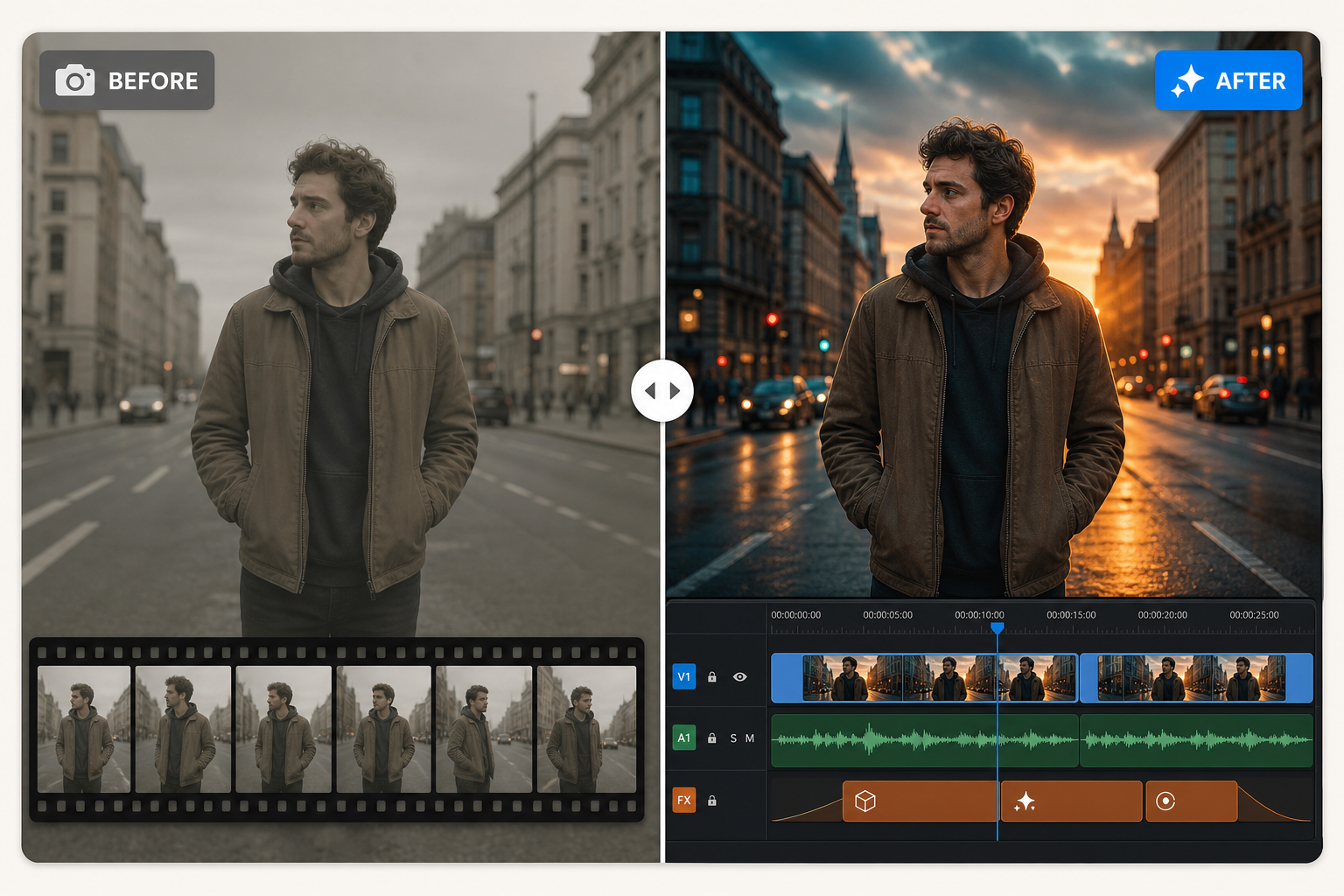
- Show before and after. Raw footage next to your edit proves your value instantly.
- Match your target client. If you want to edit Reels for brands, show Reels for brands.
- Include results. "Retention went from 35% to 52%" is more convincing than "fast-paced edit".
- Make it easy to view. A simple website, Behance, Google Drive folder or YouTube playlist works. Load speed matters more than design.
Phone-only for now? You can still build an early portfolio with mobile apps; our guide on how to edit videos on your phone shows how to get professional-looking results.
Building a creator brand instead of an editing career?Let a dedicated editor handle the timeline while you focus on content.
Claim Your Free 60-Sec EditHow Much Do Video Editors Earn in India?
Pay varies widely by city, niche, skill level and whether you're salaried or freelance. Salary reports published in 2026 broadly cluster around these ranges:
| Experience | Typical salaried range (per year) | Notes |
|---|---|---|
| Fresher (0 to 1 year) | ₹2 to 4.5 lakh | Often social media and agency roles |
| Junior (1 to 3 years) | ₹3.5 to 7 lakh | Rises quickly with a strong portfolio |
| Mid-level (3 to 5 years) | ₹6 to 10 lakh | Specialists in motion or color earn more |
| Senior / lead (5+ years) | ₹10 lakh and above | Team leads, OTT and premium brand work |
Approximate ranges compiled from 2026 salary reports. Metro cities like Bangalore, Mumbai and Delhi NCR typically pay more. Treat these as a guide, not a guarantee.
Freelancers price per project or per month. Rates depend heavily on complexity and the client's budget: a simple Reel might fetch a few hundred to a few thousand rupees, while a heavily edited YouTube video for an established channel can command many times that. International clients usually pay more than domestic ones for the same work.
Job, Freelance or Agency: Which Route Is Right?
| Factor | Full-time job | Freelance | Agency editor |
|---|---|---|---|
| Income stability | High | Variable | High |
| Earning ceiling | Moderate | High | Moderate to high |
| Learning speed | Moderate | Depends on clients | Fast (many projects, senior feedback) |
| Variety of work | Low to moderate | High | High |
| Admin work (invoices, sales) | None | A lot | Minimal |
Many editors start at an agency to learn fast, then go freelance once they have a network. Working with a video production company in Bangalore or another major city exposes you to brand, creator and podcast projects in a single year, which builds a portfolio much faster than solo freelancing.
Will AI Replace Video Editors?
AI is replacing tasks, not editors. Transcription, silence removal, rough reframing and caption generation are now automated, which means editors spend less time on grunt work and more on what clients actually pay for: story, pacing, humor, brand consistency and taste. Editors who learn AI tools become faster and more valuable; those who resist them will struggle to compete on speed.
Frequently Asked Questions
Can I become a video editor without a degree?
Yes. Most clients and many employers hire video editors based on their portfolio and reliability rather than a degree. A diploma or certification can help with some corporate and media jobs, but it is not mandatory.
How long does it take to become a video editor?
With regular practice, most people can handle simple paid work within 3 to 6 months. Becoming a confident professional with a strong portfolio typically takes 1 to 2 years of consistent work.
Which software should I learn to become a video editor?
Adobe Premiere Pro and DaVinci Resolve are the most requested in Indian job listings. Learn one deeply first, then add After Effects for motion graphics if you want to work on ads and explainer videos.
What is the salary of a video editor in India?
Salary reports from 2026 put fresher salaries at roughly ₹2 to 4.5 lakh per year and junior editors at roughly ₹3.5 to 7 lakh per year. Experienced and specialist editors in metro cities can earn ₹10 lakh or more.
How do I get my first video editing client?
Build 5 to 8 strong portfolio pieces, choose a niche, then reach out directly to small creators or businesses with a free sample edit of their own footage. Agency internships and job portals are also good starting points.
Stop Editing. Start Creating.
You record, we edit. EditAtEase turns your raw footage into scroll-stopping YouTube videos, Shorts, Reels and podcasts, so you post consistently and finally get your week back.