What Does a Video Editor Do? The Role, Explained
To viewers, a video editor is invisible. The best edits don't call attention to themselves; they just feel effortless to watch. Behind that is a job that blends storytelling, technical skill, project management and a lot of decision-making. Here's what video editors really do, whether you're thinking of becoming one or hiring one.
The Short Answer
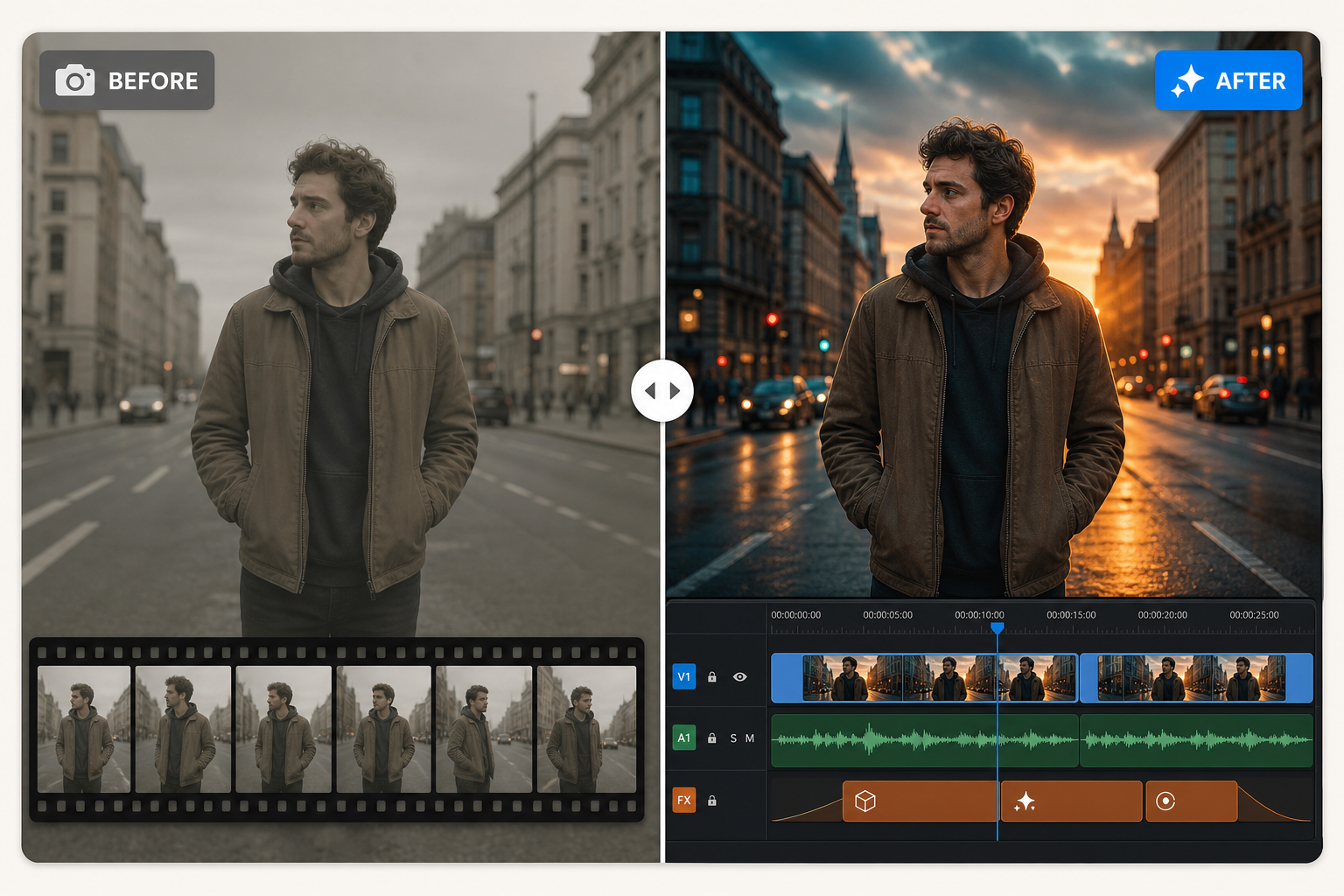
A video editor turns raw footage, audio and graphics into a finished video that tells a clear story and achieves a specific goal: keeping viewers watching, explaining an idea, selling a product or building a brand. They decide what stays, what goes, in what order, and how it looks and sounds.
That includes much more than cutting clips. A modern editor typically handles story structure, pacing, audio cleanup, music, color, captions, graphics, exports for multiple platforms and revisions based on feedback. For a step-by-step view of that process, see our guide on how to edit videos.
Core Responsibilities of a Video Editor
- Reviewing and organizing footage: importing, backing up, labeling and logging the best takes.
- Building the story: selecting moments and arranging them into a structure with a strong hook and clear payoff.
- Pacing: removing dead air, repetition and anything that loses attention.
- Adding visual variety: B-roll, zooms, screen recordings, graphics and cutaways.
- Audio editing and mixing: cleaning dialogue, balancing levels, adding music and sound effects.
- Color correction and grading: making shots consistent and giving the video a look.
- Text and captions: titles, lower thirds and accurate, styled subtitles.
- Exporting and delivering: the right format, resolution and aspect ratio for each platform.
- Revisions: interpreting feedback and refining the edit.
- Repurposing: cutting Shorts, Reels and teasers from long-form content.
Software skills are table stakes. What separates great editors is judgment: knowing what to cut, when to hold a moment, and how to make a viewer feel something.
A Typical Day for a Video Editor
Here's what a working day can look like for an editor handling creator and brand content:
| Time | Activity |
|---|---|
| 9:30 AM | Check messages, review client feedback, plan the day's priorities |
| 10:00 AM | Ingest and organize new footage for a YouTube video; back up files |
| 10:30 AM | Watch footage, log the best moments, start the rough cut |
| 1:00 PM | Lunch |
| 2:00 PM | Apply revisions to yesterday's podcast episode and export clips |
| 3:30 PM | Fine cut the YouTube video: B-roll, zooms, sound design |
| 5:30 PM | Audio mix, color pass and captions on a brand Reel |
| 6:30 PM | Export drafts, upload for review, update the project tracker |
Notice how much of the day is about organization, communication and systems, not just creative cutting. Professionals rely on a repeatable video editing workflow to juggle several projects at once without dropping anything.
Types of Video Editors
| Type | What they focus on |
|---|---|
| YouTube / creator editor | Retention-focused long-form videos, hooks, pacing, Shorts |
| Social media editor | Reels, Shorts, ads, trends and fast turnaround |
| Podcast editor | Multi-cam switching, audio cleanup, highlight clips |
| Corporate / brand editor | Explainers, testimonials, events, training, brand films |
| Wedding / event editor | Highlights, teasers and long-form films set to music |
| Film, TV and OTT editor | Narrative and documentary storytelling over long timelines |
| Assistant editor | Media management, syncing, organizing and supporting the lead editor |
Video Editor vs. Related Roles
People often confuse these roles. On small teams, one person may do several of them; on larger productions, they're separate jobs.
| Role | Main job |
|---|---|
| Video editor | Shapes the story and assembles the final video in post-production |
| Videographer / camera operator | Shoots the footage during production |
| Motion graphics designer | Creates animated text, logos and graphics |
| Colorist | Specializes in advanced color correction and grading |
| Sound designer / audio engineer | Specializes in audio cleanup, mixing and sound effects |
| Producer | Plans the project, manages budget, schedule and people |
Tools Video Editors Use
- Editing software: Adobe Premiere Pro, DaVinci Resolve, Final Cut Pro, and Avid Media Composer in film and TV.
- Motion graphics: Adobe After Effects.
- Audio: built-in tools like Resolve's Fairlight, plus Adobe Audition or Audacity.
- Review and collaboration: cloud review platforms where clients leave time-stamped comments, plus shared drives.
- AI tools: transcription, text-based editing, silence removal and auto-reframing.
- Hardware: a powerful desktop or laptop, fast SSDs, headphones and often a color-accurate monitor.
Curious what setup you'd need yourself? See our guides on editing on a laptop, editing on PC for free, and editing on your phone.
Want to see what a dedicated editor would do with your footage?Send us a clip and get a free 60-second edit.
Claim Your Free 60-Sec EditSkills That Make a Great Video Editor
Creative skills
- Storytelling and structure
- A sense of rhythm and timing
- Taste in music, typography and visuals
- Understanding the audience and platform
Technical skills
- Fluency in at least one professional editor
- Audio mixing and cleanup
- Color correction
- Media management and export settings
Professional skills
- Clear communication and handling feedback well
- Reliability with deadlines
- Confidentiality with unreleased content
- Managing multiple projects at once
Want to develop these yourself? Start with video editing for beginners, follow our roadmap on how to learn video editing, or compare options for a video editing course. For the career side, our guide on how to become a video editor covers portfolios, salaries and finding work in India.
How AI Is Changing the Video Editor's Job
AI now handles much of the mechanical work: transcribing interviews, removing silences, generating captions, reframing horizontal video to vertical and suggesting clips from long recordings. That hasn't removed the need for editors. It has shifted their time toward the work machines still struggle with: choosing the best moment, building tension, landing a joke, protecting a brand's tone, and understanding why viewers drop off.
In practice, editors who use AI well can deliver more content, faster, at the same quality, which is exactly what creators and brands need as they post across more platforms.
Working With a Video Editor: What to Expect
If you're a creator or business hiring an editor, a typical collaboration looks like this:
- Brief: you share goals, audience, reference videos, brand assets and deadlines.
- Footage handoff: you upload raw files to a shared folder.
- First draft: the editor delivers a complete cut.
- Feedback: you leave specific, time-stamped notes.
- Revisions: usually one or two rounds.
- Final delivery: exports for each platform, plus Shorts or Reels if agreed.
To get the best results, give your editor: a clear goal for each video, 2 or 3 reference videos you like, your logo and fonts, any must-include moments, and consistent feedback. Over time, a style guide makes every edit faster and more on-brand.
Whether you hire a freelancer, build an in-house team or partner with a video editing agency in Bangalore like EditAtEase, the right editor should feel like a creative partner who makes your content better, not just a pair of hands on the timeline.
Frequently Asked Questions
What does a video editor do on a daily basis?
A video editor organizes footage, builds rough and fine cuts, adds B-roll and graphics, cleans and mixes audio, corrects color, adds captions, exports for different platforms and makes revisions based on client or team feedback.
What skills does a video editor need?
Video editors need storytelling and pacing skills, fluency in software like Premiere Pro or DaVinci Resolve, audio and color basics, media management, and professional skills like communication, reliability and handling feedback.
Is a video editor the same as a videographer?
No. A videographer shoots the footage during production, while a video editor works in post-production to turn that footage into a finished video. Some people do both, especially on small teams.
What software do professional video editors use?
Most professional editors use Adobe Premiere Pro, DaVinci Resolve or Final Cut Pro. Avid Media Composer is common in film and TV, and After Effects is used for motion graphics.
Will AI replace video editors?
AI is automating repetitive tasks like transcription, captions and silence removal, but story, pacing, humor and brand judgment still require human editors. Editors who use AI tools well are becoming faster and more valuable.
Stop Editing. Start Creating.
You record, we edit. EditAtEase turns your raw footage into scroll-stopping YouTube videos, Shorts, Reels and podcasts, so you post consistently and finally get your week back.